
Car Registration Documents — Missouri
Free to compare
What Missouri Requires Before You Register
Missouri will not register a vehicle until you prove you carry at least $25,000 per person and $50,000 per accident in bodily injury liability, plus $25,000 in property damage liability. The state also mandates uninsured motorist coverage. You must bring proof of that coverage to the DMV — not just any insurance card, but a document the state recognizes as valid.
Beyond insurance, you need the vehicle title or manufacturer's statement of origin, a government-issued photo ID, an odometer disclosure statement if the vehicle is under ten years old, and payment for registration fees and sales tax. Each document serves a specific verification purpose. If one is missing or incomplete, the DMV will not process your application that day.
“The DMV's electronic insurance query is the blocker — if your carrier has not reported your policy to the state database, you cannot register.”

See What Missouri Drivers Pay for the Coverage They Need
Get My Missouri Car Insurance Quote$25,000 / $50,000 / $25,000
Missouri Minimum Liability Limits
Missouri law requires $25,000 bodily injury per person, $50,000 bodily injury per accident, and $25,000 property damage. Uninsured motorist coverage is also mandatory. The DMV verifies these minimums electronically before issuing plates.
Missouri Department of Revenue, Driver License Bureau
Proof of Insurance: What the DMV Actually Accepts
Missouri verifies insurance electronically through a database shared between carriers and the Department of Revenue. When you provide your policy number and carrier name, the DMV queries the system in real time. If your policy shows active coverage meeting state minimums, registration proceeds. If the query returns no match, registration stops.
Your insurance card is not proof of coverage for registration purposes — it is a reference document for traffic stops. The DMV needs your policy number, carrier name, and effective date. Some offices accept a printed declaration page from your carrier showing the policy details and coverage limits. Others rely entirely on the electronic query. Call your local DMV office before you go to confirm what format they prefer.
If you just bought the policy, allow 24 to 48 hours for the carrier to report it to the state database. Registering the same day you purchase coverage often fails because the electronic record has not updated yet. Wait one business day, then proceed to the DMV.
The DMV's electronic insurance query is the blocker. If your carrier has not reported your policy to the state database, you cannot register — even if you hold a valid insurance card.

Identification and Odometer Disclosure
Missouri requires a government-issued photo ID to verify your identity. A driver's license, state ID card, passport, or military ID all work. The name on your ID must match the name on the title or purchase agreement. If they do not match — for example, you recently married and changed your name — bring documentation of the name change, such as a marriage certificate or court order.
If the vehicle is less than ten years old, you must complete an odometer disclosure statement. This is usually printed on the back of the title. The seller records the odometer reading at the time of sale, and you acknowledge it by signing. If the title does not have an odometer section, use Form 4809 (Odometer Disclosure Statement), available at the DMV or online. Vehicles ten years old or older are exempt from this requirement.
Missouri also requires proof of a passed safety inspection and, in some counties, an emissions inspection. Bring the inspection certificate with you. The certificate is valid for 60 days from the inspection date. If more than 60 days have passed, you need a new inspection before the DMV will register the vehicle.
4,290,391
Licensed Drivers in Missouri
Missouri had 4,290,391 licensed drivers as of 2022, with 5,373,722 registered vehicles. That ratio means many households register multiple vehicles, and each registration requires the same proof-of-insurance and title documentation.
Missouri Department of Revenue
Sales Tax and Registration Fees
Missouri collects sales tax at the time of registration. If you bought the vehicle from a dealer, the dealer may have collected sales tax at the point of sale — bring the bill of sale showing tax paid. If you bought from a private seller, you pay sales tax when you register. The DMV calculates the amount based on the purchase price listed on the title or bill of sale.
Registration fees vary by vehicle weight, type, and whether you choose one-year or two-year registration. Heavier vehicles and trucks cost more. The DMV accepts cash, check, or card. Bring enough to cover both sales tax and registration fees — the total can reach several hundred dollars for a recently purchased vehicle.
What Happens If You Are Missing a Document
If you arrive at the DMV without one of the required documents, the office will not process your registration. You leave without plates and must return another day with the missing item. The most common missing document is proof of insurance — either because the policy is too new to appear in the state database, or because the driver brought only an insurance card instead of the policy details the DMV needs.
If the title is missing or unsigned, you cannot register until you obtain a corrected title. If the previous owner did not sign, contact them and arrange to meet at a notary to complete the assignment. If the title is lost, the previous owner must apply for a duplicate title from their state's DMV before you can proceed. That process takes one to two weeks in most states.
Missing an odometer disclosure or inspection certificate is easier to fix. You can complete the odometer form at the DMV if the seller is with you. If not, mail the form to the seller, have them complete and sign it, and return it to you. For inspections, schedule an appointment at any Missouri-licensed inspection station, pass the inspection, and return to the DMV with the certificate. Most inspection stations can see you the same day or within two business days.
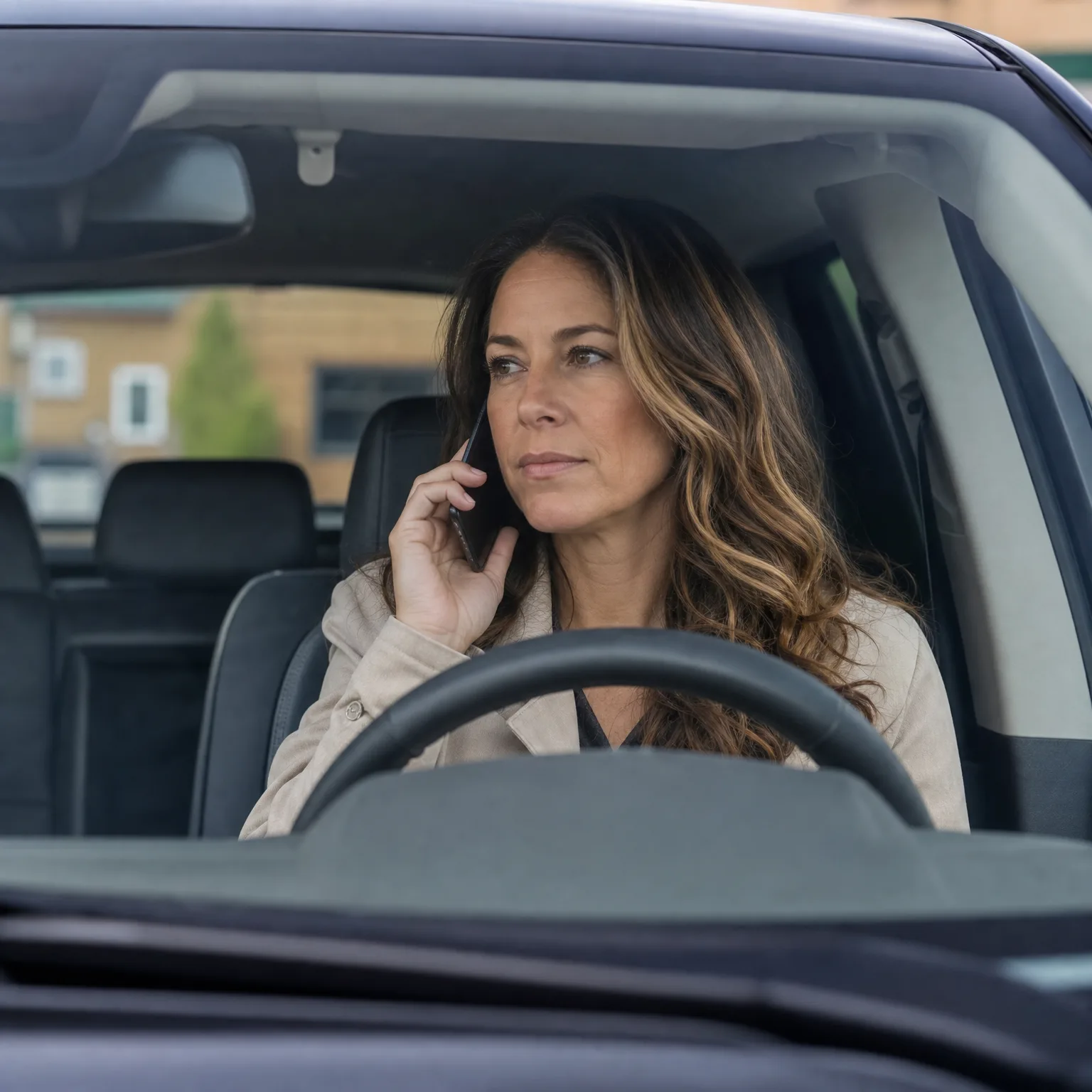
Register All Household Vehicles With the Same Proof
If you are registering multiple vehicles — a common situation for households that insure two or more cars — each vehicle requires its own title, odometer disclosure if applicable, and inspection certificate. The insurance proof, however, covers all vehicles on the same policy. Provide the policy number once, and the DMV's electronic query will show every vehicle listed on that policy. You do not need separate insurance cards or declarations for each car.
Households adding a second or third vehicle mid-term should confirm with their carrier that the new vehicle has been added to the policy and reported to the state database before going to the DMV. Registering multiple vehicles in one visit saves time, but only if every document for every vehicle is complete. Missing one title or one inspection certificate stops the entire transaction. Organize your documents by vehicle before you leave home, and double-check that each stack is complete.
Title and Ownership Documentation
For a new vehicle purchased from a dealer, bring the manufacturer's statement of origin (MSO). The dealer provides this at delivery. For a used vehicle, bring the signed title from the previous owner. The seller must sign the title's assignment section, and you must sign as the buyer. If the title lists a lienholder and the loan is paid off, you need a lien release letter from that lender on letterhead.
If the vehicle has an active loan, the lender holds the title. Bring the loan agreement or a letter from the lender stating they hold the title and listing you as the borrower. Missouri will issue registration with the lender listed as lienholder. When you pay off the loan, the lender sends the title to you, and you can remove the lien by filing a notice with the DMV.
Get Your Free Quote
Get My Missouri Car Insurance QuoteFrequently Asked Questions
Can I register a car in Missouri without insurance?
No. Missouri requires proof of liability insurance meeting state minimums — $25,000 per person, $50,000 per accident bodily injury, and $25,000 property damage — before the DMV will issue registration. The state verifies coverage electronically when you apply.
What if my insurance card does not work at the Missouri DMV?
The insurance card is not proof of coverage for registration. The DMV queries a state database using your policy number and carrier name. If your policy is new, wait 24 to 48 hours for the carrier to report it to the database before attempting to register.
Do I need the original title to register a car in Missouri?
Yes. Missouri requires the signed original title or manufacturer's statement of origin. If the title is lost, the previous owner must apply for a duplicate from their state's DMV before you can register. That process typically takes one to two weeks.
How long does a Missouri safety inspection certificate last?
60 days from the inspection date. If more than 60 days have passed when you go to the DMV, you need a new inspection before Missouri will register the vehicle.
Can I register two cars at once in Missouri?
Yes. Bring the complete document set — title, odometer disclosure, inspection certificate — for each vehicle. Insurance proof covers all vehicles on the same policy, so you provide the policy number once and the DMV's query shows every car listed.
What happens if the seller did not sign the title?
Missouri will not register the vehicle until the title assignment is complete. Contact the seller and arrange to meet at a notary to sign the title. If the seller is unavailable or uncooperative, you may need legal assistance to compel the transfer.