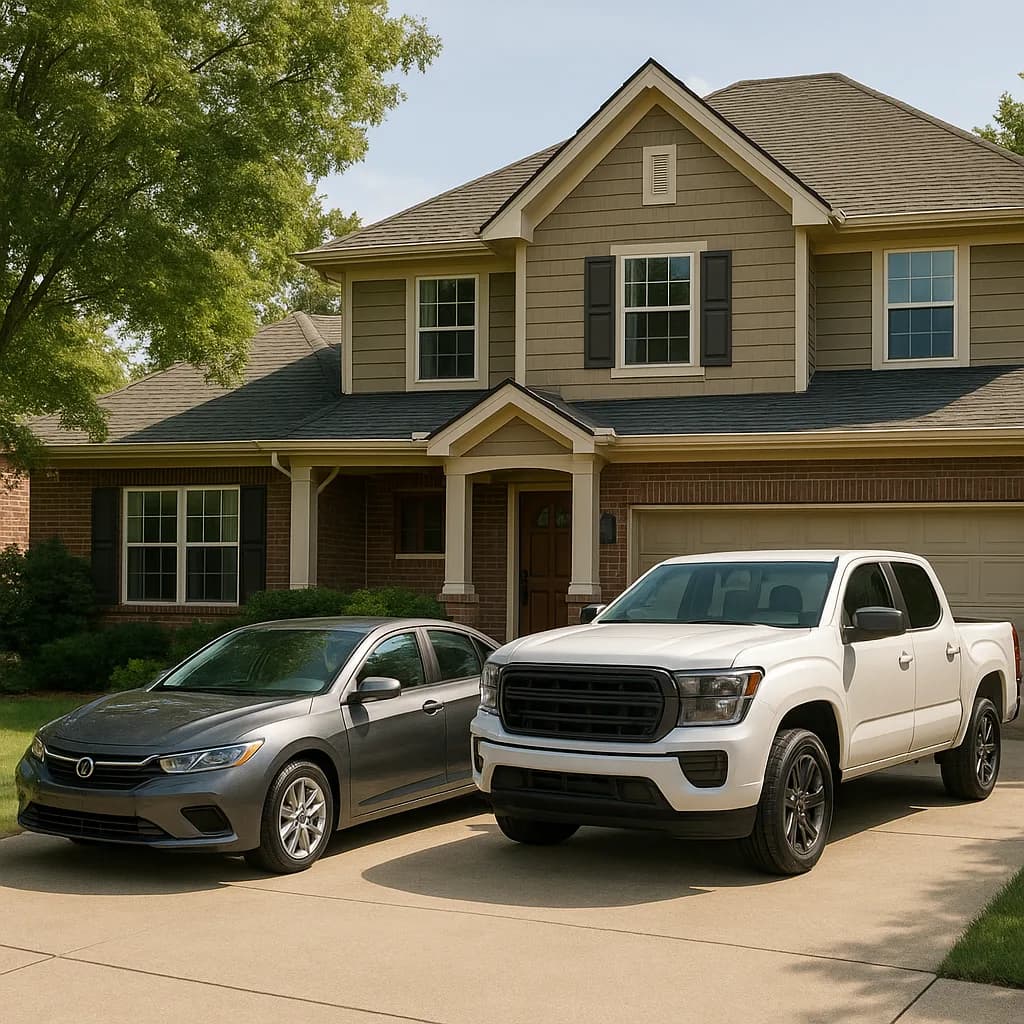
When Adding a Second Vehicle Changes Your Premium Structure
You just bought a second car and called your carrier to add it to your existing Missouri policy. The agent quoted a premium that jumped more than you expected, or mentioned that the multi-car discount requires every vehicle on the same policy. You thought adding a car would simply add a flat amount, but the entire policy re-rated.
Missouri law requires every registered vehicle to carry at least $25,000 bodily injury per person, $50,000 bodily injury per accident, and $25,000 property damage liability. When you add a vehicle mid-term, the carrier re-rates the entire policy based on the new vehicle's attributes, the drivers assigned to it, and the garaging address. The multi-car discount applies only when every vehicle sits on the same policy under the same named insured, and most carriers require that all vehicles garage at the same address.
Compare car insurance rates in your state
Get quotes from licensed carriers — no obligation, no spam, results in minutes.
Get Your Free QuoteMissouri Minimum Liability Limits
Every vehicle registered in Missouri must carry at least $25,000 bodily injury per person, $50,000 bodily injury per accident, and $25,000 property damage liability. These minimums apply per vehicle, not per household.
Missouri Department of Revenue, Driver License Bureau
The Same-Policy Requirement Most Households Miss
The multi-car discount is not automatic when you own multiple vehicles. It applies only when every vehicle sits on the same policy, under the same named insured, and typically when all vehicles garage at the same address. A vehicle titled to a household member on a separate policy does not count toward the multi-car discount on your policy.
Missouri households often structure coverage incorrectly after marriage, when a household member moves in with a car, or when a teenager starts driving. If each spouse maintains a separate policy, neither receives the multi-car discount. If a household member's car is titled in their name and they carry their own policy, that vehicle does not contribute to your multi-car discount even if it garages at your address.
Combining two existing policies into one shared policy usually lowers the combined premium, but not always. The combined policy re-rates based on every driver's record, every vehicle's attributes, and the household's total exposure. A household with one clean-record driver and one driver with a recent violation may pay more combined than they paid on separate policies, because the violation now affects the entire policy's base rate.
A vehicle titled to someone outside the household or garaged at a different address typically does not qualify for the same-policy multi-car discount, even when the owner is a family member.
How Missouri Carriers Structure Multi-Vehicle Policies

Missouri's insurance market includes 23 carriers writing standard and non-standard auto policies. Carriers writing multi-vehicle households include Allstate, American Family, Farmers, Geico, Liberty Mutual, Nationwide, Progressive, State Farm, and Travelers. Each carrier calculates the multi-car discount differently: some apply a percentage reduction to each vehicle after the first, others reduce the policy's base premium when multiple vehicles enroll.
The carrier's base rate matters more than the discount percentage. A carrier with a lower base rate and a smaller multi-car discount often produces a lower total premium than a carrier with a higher base rate and a larger discount. Missouri households comparing carriers should request quotes that include every vehicle and every driver in the household, because the combined policy premium depends on the interaction between the base rate, the discount structure, and the household's total risk profile.
Related Articles



What Happens When You Add a Vehicle Mid-Term
Adding a vehicle mid-term does not simply add a flat amount to your existing premium. The carrier re-rates the entire policy based on the new vehicle's year, make, model, safety features, theft risk, and the drivers assigned to it. Missouri carriers typically provide a grace period during which a newly-purchased vehicle is covered under your existing policy without formal notification, but that period varies by carrier and usually lasts between 14 and 30 days.
If you do not notify the carrier within the grace period, the newly-purchased vehicle may be denied coverage at claim time. The carrier will argue that the policy never extended to the unreported vehicle, and you will face out-of-pocket liability for any damage or injury the vehicle caused. Missouri law does not mandate a specific grace period; the period is a contractual feature each carrier defines in its policy terms.
When you add a vehicle, the carrier assigns drivers to each vehicle based on household composition and driving records. If the new vehicle is assigned to a driver with a recent violation or a young driver, the policy's premium will increase more than if the vehicle is assigned to a clean-record driver. Missouri households with multiple drivers should clarify which driver will be the primary operator of each vehicle before finalizing the addition, because the assignment determines the policy's total cost.
Missouri Uninsured Motorist Rate
20.7%
Approximately 20.7% of Missouri motorists drive without insurance. Uninsured motorist coverage is required in Missouri and protects your household when an at-fault driver cannot pay for damage or injury they caused.
Insurance Research Council, 2023
Coverage Decisions Across Multiple Vehicles
Missouri requires liability coverage on every vehicle, but collision and comprehensive coverage are optional unless a lienholder requires them. Households insuring multiple vehicles often structure coverage differently across vehicles based on each vehicle's value, age, and use. A newer financed vehicle typically carries full coverage, while an older paid-off vehicle may carry only liability and uninsured motorist coverage to meet the state minimum.
Dropping collision and comprehensive on an older vehicle lowers the policy's total premium, but leaves you responsible for repairing or replacing that vehicle out of pocket after an accident. Missouri households should evaluate each vehicle's replacement cost against the annual cost of collision and comprehensive coverage. When a vehicle's value falls below a threshold where the annual premium for physical-damage coverage approaches the vehicle's market value, many households drop those coverages and self-insure the vehicle's repair or replacement cost.
Compare Carriers Writing Missouri Multi-Vehicle Households
Missouri households insuring two or more vehicles should request quotes from at least three carriers that write multi-vehicle policies in the state. Each carrier's base rate, discount structure, and underwriting criteria produce different total premiums for the same household. Carriers writing Missouri multi-vehicle households include Allstate, American Family, Farmers, Geico, Liberty Mutual, Nationwide, Progressive, State Farm, and Travelers.
Request quotes that include every vehicle and every driver in your household. The combined policy premium depends on the interaction between each vehicle's attributes, each driver's record, the household's garaging address, and the carrier's base rate. Missouri households comparing carriers should clarify whether the quote assumes all vehicles garage at the same address, whether every driver in the household is listed on the policy, and whether the multi-car discount is already applied to the quoted premium. Use the site's comparison tool to request quotes from carriers writing your household's vehicles and drivers.