
Cheapest Car Insurance in Missouri — Multi-Car Households
Free to compare
Why Multi-Car Households Pay Differently
You own two or more vehicles, you carry Missouri's required minimums on each, and you want the lowest combined premium without dropping coverage your household needs. The question is not which carrier advertises the lowest rate — it is which carrier structures the multi-car discount in a way that actually lowers your total cost when all vehicles sit on one policy.
Missouri law requires every registered vehicle to carry at least $25,000 bodily injury per person, $50,000 bodily injury per accident, and $25,000 property damage. The state also mandates uninsured motorist coverage at the same limits. When you insure multiple cars, every vehicle on the policy must meet these minimums, and most carriers apply the multi-car discount only when every vehicle is titled to the same household and garaged at the same address. The discount structure varies by carrier — some reduce the base rate before applying coverage selections, others discount each vehicle separately — and that structural difference changes which carrier delivers the lowest combined premium for your specific household.
“A carrier with a lower advertised rate per vehicle can cost more for two or three cars if its multi-car discount does not reduce the base rate.”
See What Missouri Drivers Pay for the Coverage They Need
Get My Missouri Car Insurance Quote$1,199.53
Missouri Average Annual Auto Expenditure Per Vehicle
The average annual auto insurance expenditure per insured vehicle in Missouri was $1,199.53 in 2023. That figure reflects all coverage levels and household types statewide, not the minimum-coverage multi-car household specifically, but it anchors the cost reality Missouri drivers face.
NAIC Auto Insurance Database Report 2023
How the Multi-Car Discount Actually Works
The multi-car discount is not a flat percentage applied uniformly. Most carriers require every vehicle on the policy to be titled to the same person or household members living at the same address. If one car is titled to a household member on a separate policy, that vehicle does not count toward the multi-car discount on your policy, even if you live together.
Carriers structure the discount in two ways. Some reduce the base rate before calculating coverage costs — the discount applies to the policy as a whole, and every vehicle benefits from the lower starting rate. Others discount each vehicle individually after calculating its coverage cost — the second vehicle gets a discount, the third gets a larger one, and so on. A carrier that discounts the base rate can deliver a lower combined premium even if its advertised per-vehicle rate is higher than a competitor that discounts vehicles individually.
When you add a vehicle mid-term, the policy re-rates immediately. The carrier recalculates the premium for every vehicle on the policy based on the new vehicle count, the new total exposure, and the updated multi-car discount tier. That re-rating can raise the cost of the existing vehicles, not just add the cost of the new one. If the new vehicle is higher-risk — a sports car, a vehicle with a young driver, or a car garaged in a higher-theft ZIP code — the re-rating can push the combined premium higher than you expected.
A carrier with a lower advertised rate per vehicle can cost more for two or three cars if its multi-car discount structure does not reduce the base rate.

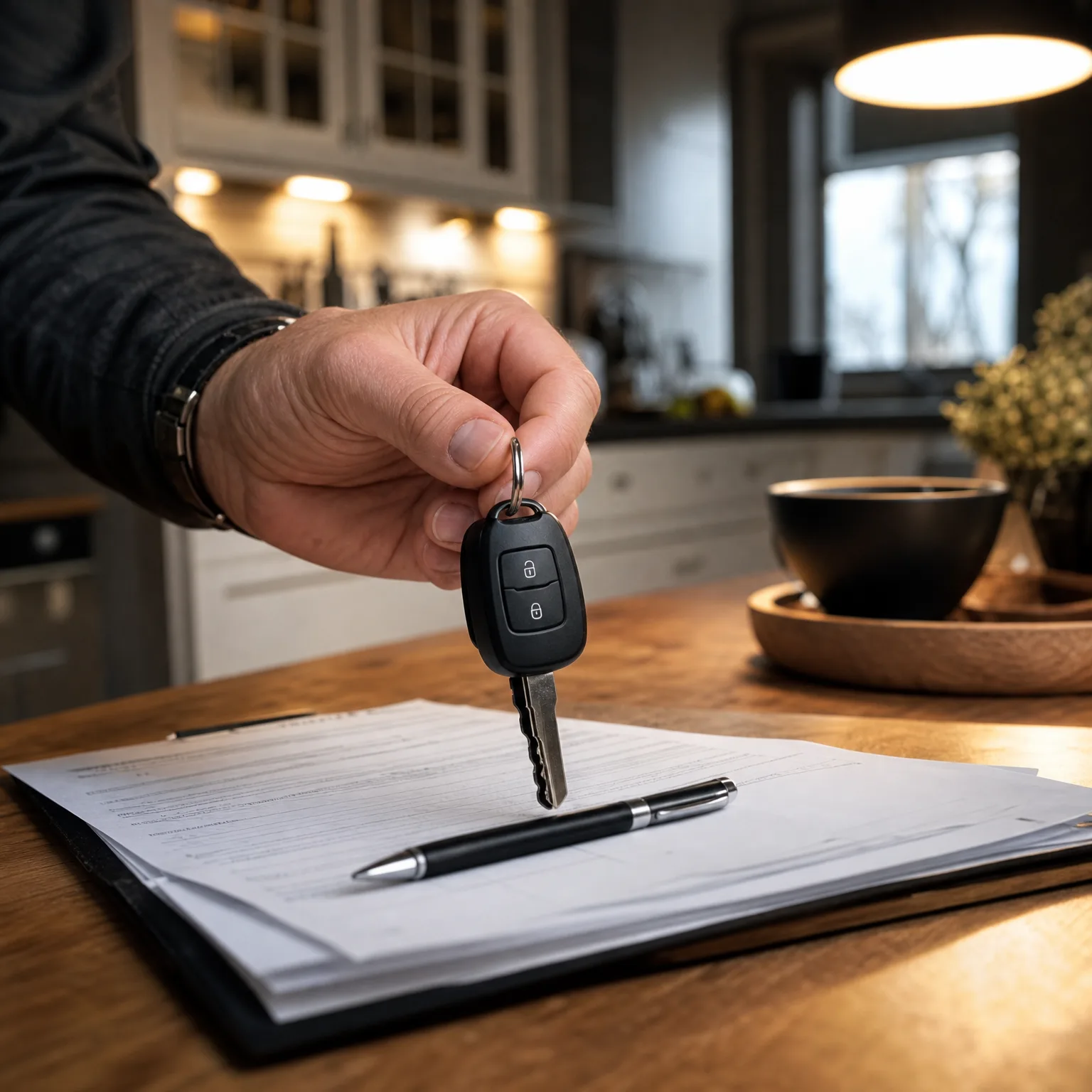



State-Specific Cost Drivers Missouri Households Face
Missouri's uninsured motorist rate was 20.7% in 2023, one of the highest in the country. That rate drives up the cost of uninsured motorist coverage, which the state mandates at the same limits as liability. Carriers price UM coverage based on the probability of a claim, and a one-in-five chance the other driver has no insurance raises that probability significantly.
Missouri uses a pure comparative fault system. That system increases the frequency of liability claims, because even minor accidents produce payouts, and carriers price liability coverage accordingly. Multi-car households face higher combined liability premiums because the total exposure — the number of vehicles that could be involved in an at-fault accident — is higher.
The state recorded 405.8 motor vehicle thefts per 100,000 population in 2024. Comprehensive coverage, which pays for theft, is optional in Missouri, but most lenders require it if you finance a vehicle. If you own multiple financed cars, comprehensive coverage on every vehicle raises the combined premium. Carriers price comprehensive based on theft rates in your garaging ZIP code, and urban areas — St. Louis, Kansas City, Springfield — see higher theft rates and higher comprehensive premiums than rural counties.
28 carriers
Missouri Auto Insurance Carriers
Twenty-eight carriers write auto insurance in Missouri, including standard, preferred, and non-standard tiers. Most write multi-car policies, but discount structures and eligibility rules vary by carrier. Comparing quotes from at least three carriers that write your household's vehicle types is the only way to identify the lowest combined premium.
Missouri Department of Insurance carrier roster
Combining Policies After Marriage or a Move
When two people with separate auto policies marry or move in together, combining the policies onto one multi-car policy usually lowers the combined premium — but not always. If one person carries a preferred-tier policy and the other carries a standard-tier policy, combining them forces both onto the same tier. If the preferred-tier person's carrier does not write standard-tier risks, the combined policy moves to a carrier that does, and the preferred-tier person loses their lower rate.
Carriers require every vehicle on a multi-car policy to be garaged at the same address. If you and your spouse garage cars at two addresses — one at home, one at a work location — most carriers will not write a single multi-car policy covering both. You will need separate policies, and neither will qualify for the multi-car discount. Some carriers allow a second garaging address for a vehicle used primarily at that location, but the discount structure changes, and the combined premium is usually higher than a true multi-car policy with all vehicles at one address.
Compare Carriers That Write Your Household
The lowest combined premium for a Missouri multi-car household depends on how many vehicles you insure, where you garage them, who drives them, and which coverage levels you carry beyond the state minimums. No single carrier is cheapest for every household. State Farm, Geico, and Progressive write the largest volume of multi-car policies in Missouri, but Auto-Owners, Amica, and American Family often deliver lower premiums for preferred-tier households with clean records and multiple vehicles.
Get quotes from at least three carriers that write multi-car policies in your county. Ask each carrier whether the multi-car discount applies to the base rate or per vehicle, whether adding a third or fourth car increases the discount tier, and whether all vehicles must be garaged at the same address. Compare the combined premium for all vehicles, not the per-vehicle rate. A carrier with a higher per-vehicle rate can deliver a lower combined premium if its multi-car discount structure reduces the base rate before calculating coverage costs. Use the Missouri car insurance comparison tool to request quotes from carriers writing your household's vehicles.
Which Missouri Carriers Write Multi-Car Policies
State Farm, Geico, Progressive, Allstate, Farmers, and Nationwide write multi-car policies across Missouri and offer online quoting. Auto-Owners and Amica write preferred-tier multi-vehicle policies but require an agent. American Family, Country Financial, and Shelter write standard-tier multi-car coverage with online and agent channels. Liberty Mutual and Travelers write multi-vehicle policies statewide with online quoting available.
Each carrier structures its multi-car discount differently. Some apply the discount to the policy base rate, others discount each vehicle individually, and a few tier the discount by vehicle count — the third car gets a larger discount than the second. When you compare quotes, ask each carrier whether the discount applies to the base rate or per vehicle, and whether adding a third or fourth car increases the discount tier. That structural detail determines which carrier delivers the lowest combined premium for your household.
Get Your Free Quote
Get My Missouri Car Insurance QuoteFrequently Asked Questions
Does Missouri require the same coverage on every car in a multi-car policy?
Missouri requires every registered vehicle to carry at least $25,000/$50,000/$25,000 liability and uninsured motorist coverage at the same limits. Beyond those minimums, you can carry different coverage levels on each vehicle — full coverage on a financed car, liability-only on an older paid-off car — as long as every vehicle meets the state minimums.
Can I insure two cars on one policy if they are titled to different people?
Most Missouri carriers allow a multi-car policy when vehicles are titled to different household members living at the same address — spouses, parents and children, or domestic partners. If the vehicles are titled to people who do not live together, most carriers will not write a single policy covering both, and you will need separate policies.
How much does adding a third car to a Missouri policy raise the premium?
Adding a third car re-rates the entire policy based on the new vehicle count, the new total exposure, and the updated multi-car discount tier. Some carriers increase the discount when you add a third vehicle, which can offset part of the new car's cost. The premium increase depends on the third car's value, the drivers assigned to it, and whether it is garaged in a higher-risk ZIP code than the first two.
Do all Missouri carriers offer the same multi-car discount?
No. Some carriers reduce the base rate before calculating coverage costs, others discount each vehicle individually, and a few tier the discount by vehicle count. A carrier that discounts the base rate can deliver a lower combined premium even if its per-vehicle rate is higher than a competitor that discounts vehicles individually.
Can I combine my auto and home insurance to lower the cost of a multi-car policy?
Most Missouri carriers offer a bundling discount when you combine auto and home or renters insurance. The bundling discount is separate from the multi-car discount, and both can apply to the same policy. Bundling typically reduces the combined premium by a larger amount than the multi-car discount alone, but the total savings depend on the carrier's discount structure and your home insurance cost.
What happens if I add a vehicle mid-term to an existing Missouri policy?
The carrier re-rates the entire policy immediately. The premium for every vehicle on the policy recalculates based on the new vehicle count, the new total exposure, and the updated multi-car discount tier. You pay the difference between the old premium and the new premium for the remaining term, prorated by the number of days left in the policy period.
Do Missouri carriers require all vehicles on a multi-car policy to be garaged at the same address?
Most carriers require every vehicle on a multi-car policy to be garaged at the same address. Some allow a second garaging address for a vehicle used primarily at that location — a work vehicle, a college student's car — but the discount structure changes, and the combined premium is usually higher than a policy with all vehicles at one address.